|
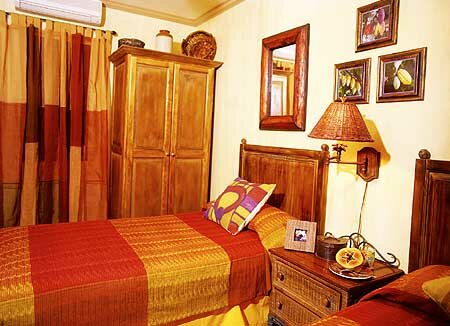
When in The Cocoa House, it is easy to imagine yourself shrouded in a moist forest, canopied by the wet, glistening red, amber and gold leaves of the cocoa trees. Early morning on a cocoa estate is a busy but quiet time. Amidst the gently undulating hills of the Central Plains, workers in tall rubber boots, cutlasses in hand, enter the estate to inspect and pick the ripe maroon pods.
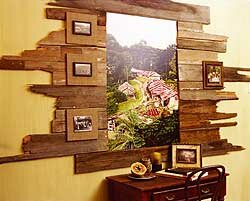 Crack one open and you will be privy to the beans of what the Incas called, the “drink of the gods”. Named by the Incas, the “golden bean”, cocoa, by the turn of the 20th century had become Trinidad and Tobago's most profitable export and was responsible for a new wave in socio-economic development, in the emergence of a multi-ethnic middle class and the dispersion of population out of the original settlement cities, to the ‘country' areas. Crack one open and you will be privy to the beans of what the Incas called, the “drink of the gods”. Named by the Incas, the “golden bean”, cocoa, by the turn of the 20th century had become Trinidad and Tobago's most profitable export and was responsible for a new wave in socio-economic development, in the emergence of a multi-ethnic middle class and the dispersion of population out of the original settlement cities, to the ‘country' areas.
It is in the country that you are most likely to hear of our rich and mystical folklore characters, like the ‘Douen', the forest children whose feet are turned backwards or the La Diablesse, the beautiful Creole woman with a cow's hoof for a foot. We doubt, however, that you'll be visited by any of these characters while you stay in The Cocoa House.
 As you relax to enjoy the view of the cocoa estate through the window behind your bed, with your cup of hot local cocoa, it is far more likely that you will find yourself imagining the wooden estate houses illuminated by the golden light of kerosene lamps or the women of the estate dancing on the shiny cocoa beans and ultimately, being lulled to sleep by the sound of the stream that flows through the Cocoa plantation of your imagination. As you relax to enjoy the view of the cocoa estate through the window behind your bed, with your cup of hot local cocoa, it is far more likely that you will find yourself imagining the wooden estate houses illuminated by the golden light of kerosene lamps or the women of the estate dancing on the shiny cocoa beans and ultimately, being lulled to sleep by the sound of the stream that flows through the Cocoa plantation of your imagination.
|